
Remote I/O Modules for Industrial Automation
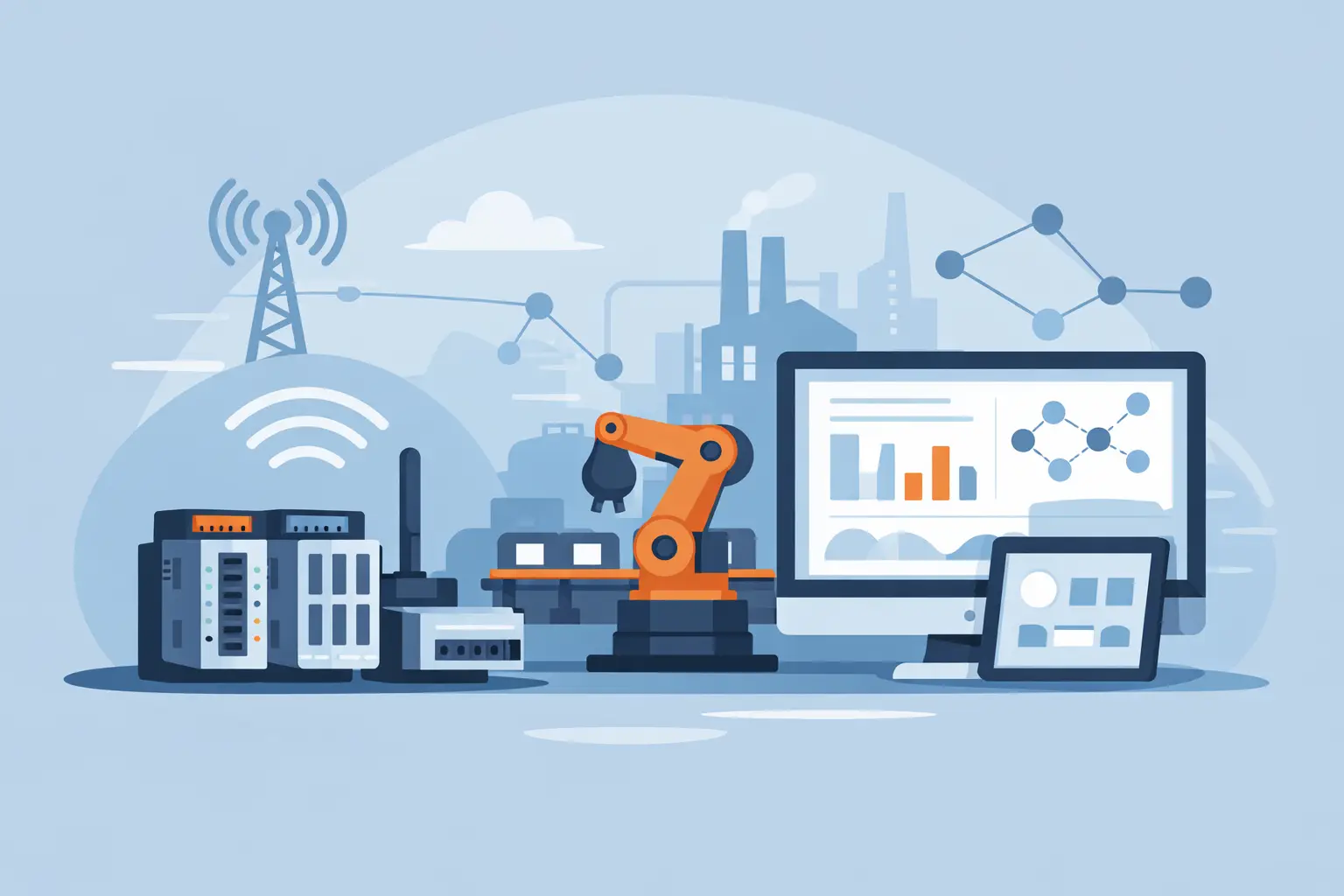
When a new skid, conveyor zone, or remote machine station is added, the real cost often shows up in wiring time, panel space, and startup delays. Remote I/O modules for industrial automation are often the fastest way to extend control without rebuilding the entire architecture. For plants trying to keep production moving, that matters more than theory.
Why remote I/O modules matter on the plant floor
A centralized control cabinet works well until field devices start spreading out. Long home runs for every sensor, valve, pushbutton, and analog signal add labor, create more failure points, and make troubleshooting slower. Remote I/O shifts signal collection closer to the machine or process area, then sends that data back to the PLC or controller over an industrial network.
That change affects more than layout. It can reduce copper use, shrink panel congestion, and make future expansion less disruptive. On a packaging line, for example, adding a field I/O island near end-of-line equipment is usually simpler than pulling every new point back to a main cabinet. In a process environment, placing I/O closer to instruments can also improve installation efficiency, especially where junction boxes and conduit runs are driving cost.
There is a trade-off. Distributed I/O introduces network dependency, and the wrong module choice can create compatibility problems with the existing PLC platform, protocol, or environmental rating. The benefit is real, but only when the selection matches the machine and the control system already in place.
What remote I/O modules actually do
At the simplest level, a remote I/O module takes signals from field devices and presents them to the controller across a communication network. That can include discrete inputs for sensors, discrete outputs for solenoids and contactors, analog inputs for pressure or temperature transmitters, and analog outputs for drives or control valves.
Some modules are built as compact blocks for machine-level mounting. Others are modular slice systems that let you combine digital, analog, safety, relay, temperature, or specialty cards on one node. The right form factor depends on point count, cabinet design, and whether the application needs flexibility later.
For a controls engineer, the key question is usually not whether remote I/O can work. It is whether the module supports the right network, voltage class, diagnostics, and channel density without creating extra integration work.
Choosing remote I/O modules for industrial automation
The first filter is controller compatibility. If the plant standard is Siemens, Allen-Bradley, Omron, Schneider, ABB, Mitsubishi, or another major platform, the remote I/O needs to fit the communication environment already in use. That may mean EtherNet/IP, PROFINET, Modbus TCP, EtherCAT, PROFIBUS, CC-Link, or another protocol. Even when gateways are available, native compatibility is usually easier to commission and support.
After protocol, point type matters. A simple conveyor extension may only need 24 VDC digital inputs and outputs. A batching system may need analog signals, RTD or thermocouple inputs, and better channel isolation. A machine builder may also need high-speed counters or motion-adjacent signaling. Buying only by brand or price can cause problems if the application needs specialty functions later.
Environmental conditions come next. In a clean enclosure, standard IP20 modular I/O is common. On the machine, IP65, IP67, or IP69K block I/O may be a better fit. Washdown, vibration, electrical noise, ambient temperature, and available mounting space all affect module life and serviceability. A low-cost option in the wrong environment is usually not low cost for long.
Diagnostics are another practical differentiator. Channel-level status, short-circuit indication, broken-wire detection, and communication fault reporting can save time during startup and maintenance. For operations teams, better diagnostics often justify the higher purchase price because they reduce troubleshooting time during unplanned downtime.
Where buyers get tripped up
One common mistake is sizing only for current points. If a machine has 28 signals today, selecting exactly enough channels leaves no room for revisions, spare devices, or field changes. Adding a second node later can be more expensive than leaving reasonable capacity now.
Another issue is power design. Remote I/O is not just about network communication. Field power segmentation, output current limits, inrush loads, and commoning arrangements matter. Solenoid banks, indicator stacks, and contactor coils can create issues if the power budget is too tight or grouped incorrectly.
Legacy systems add another layer. Replacement buyers often need exact platform continuity rather than a modern redesign. In those cases, the question is less about the best current architecture and more about finding compatible remote I/O that fits the installed base, software environment, and commissioning practices already in the plant.
Brand and platform considerations
In most facilities, brand standardization drives the first pass of selection. Plants already invested in Siemens or Allen-Bradley typically want remote I/O that fits their PLC programming tools, spare parts approach, and network standards. OEMs may be locked into Schneider, Omron, Mitsubishi, or Beckhoff based on machine design history. System integrators often have more flexibility, but they still need to balance customer standards with delivery speed and long-term support.
That is why recognizable manufacturer lines matter in procurement. Buyers are not usually shopping for a generic concept. They are trying to source a specific module family, expansion slice, coupler, power module, or replacement part number that will install cleanly and ship on time. When downtime is active, exact matching becomes more important than broad feature comparisons.
For mixed-brand facilities, cross-brand sourcing can also simplify purchasing. A single order may include PLC hardware, sensors, power supplies, terminal blocks, communication components, and remote I/O from different manufacturers. That kind of consolidation is useful for maintenance teams trying to reduce order fragmentation and keep repairs moving.
Remote I/O in new builds vs replacement work
In new machine builds, remote I/O is often a design decision aimed at reducing panel complexity and field wiring labor. Engineers can place I/O where the devices are, standardize assemblies, and keep control cabinets smaller. That usually improves repeatability for OEMs and panel builders.
Replacement work is different. The priority is speed, compatibility, and restoring production. Maintenance buyers may not have the option to redesign the architecture around a failed node. They need the correct replacement module, coupler, terminal base, or accessory with minimal risk to the running system.
That is where part-number accuracy matters. Similar-looking remote I/O components can differ by protocol, revision, firmware range, terminal style, or power handling. Ordering by family name alone is risky. Buyers should verify the exact catalog number, network type, voltage, and mechanical fit before purchase.
What to verify before ordering
For most industrial buyers, the best purchasing process is straightforward. Confirm the PLC or controller platform, network protocol, and required I/O types. Check mounting style, enclosure rating, power requirements, and whether the application needs expansion capability. Then verify exact manufacturer part numbers and any related accessories such as bases, connectors, end plates, power feed modules, or bus couplers.
Lead time and shipment continuity also matter. If a failed remote I/O node is holding up a machine, availability is part of the technical decision. A suitable module that cannot be sourced in time may not solve the real problem. This is especially true for legacy automation platforms and high-demand replacement parts.
For buyers managing multiple brands, working with a supplier that supports cross-brand sourcing can reduce delays. American Automation 24 fits that purchasing model by giving industrial teams access to branded automation components across major manufacturers through one procurement channel.
When remote I/O is the right choice
Remote I/O is usually the right choice when field devices are spread across a machine or process area, when panel space is limited, or when installation cost is being driven by cable runs. It is also a strong option when future expansion is likely and the control architecture needs to scale without major rewiring.
It is not always the right answer. Very small systems with limited points and short wiring distances may be simpler with local I/O. Highly critical applications may also require closer attention to network redundancy, safety architecture, and fault response before distributed I/O is adopted broadly.
The practical decision comes down to fit. If the module family matches the controller, environment, signal mix, and service strategy, remote I/O can reduce installation burden and make maintenance more manageable. For industrial buyers, that is the value that counts - fewer delays, clearer compatibility, and a faster path from part identification to production recovery.
A good remote I/O purchase is rarely about features alone. It is about getting the right module, from the right brand, with the right compatibility, before downtime gets more expensive.