
Industrial Control Panel Components Guide
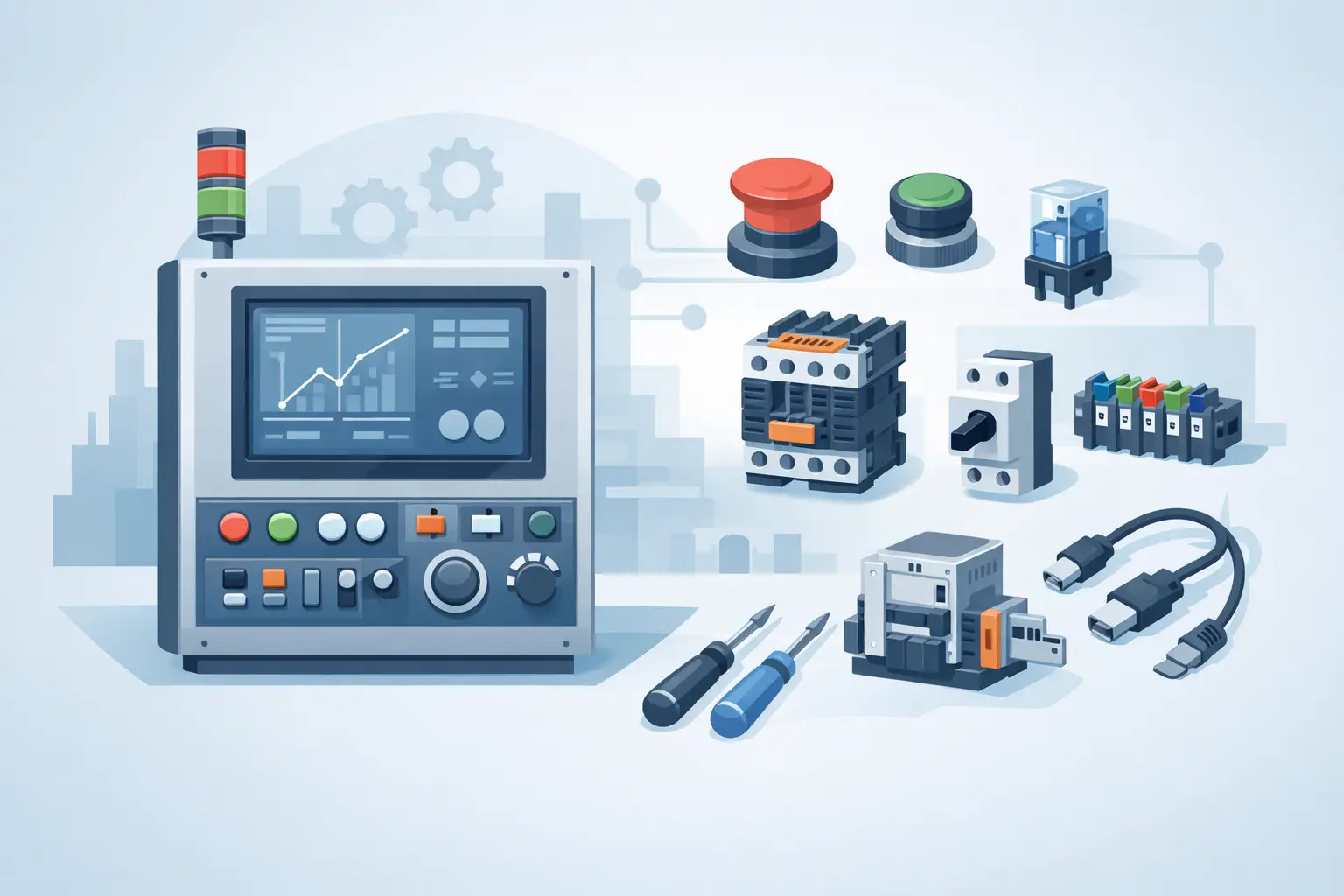
A control panel usually gets attention only when a line stops, a motor will not start, or an operator sees a fault that should not be there. That is why an industrial control panel components guide matters to buyers, panel builders, and maintenance teams. When you know what each component does and how it fails, you can troubleshoot faster, order the right replacement, and avoid wasting time on parts that are close but not actually compatible.
Industrial control panels are not just boxes full of hardware. They are organized systems that distribute power, protect equipment, manage logic, and provide a safe point of interface between machines and people. In most facilities, the panel is also where brand decisions, voltage requirements, and legacy design choices all meet. That makes component selection less about theory and more about exact fit, electrical ratings, and lead time.
What an industrial control panel components guide should cover
A useful industrial control panel components guide starts with function, not catalog categories. Most panels are built around a few core jobs. They bring power in, condition and distribute it, protect circuits, execute control logic, switch loads, and provide feedback to operators and connected systems.
The exact mix depends on the application. A simple conveyor panel may rely on a power supply, relays, contactors, motor protection, and a small PLC. A more complex packaging or process panel may add HMIs, managed networking, safety relays, VFDs, signal isolators, and remote I/O. The component list changes, but the purchasing logic stays the same - match electrical requirements, physical constraints, communication standards, and the original design intent.
Power distribution and circuit protection
Every panel begins with incoming power handling. This usually includes a main disconnect, branch circuit protection, terminal distribution, and grounding hardware. If the incoming side is wrong, every component downstream is at risk.
Circuit breakers and fuses are the first protection layer most buyers think about, and for good reason. They are straightforward to identify but easy to mis-spec if you focus only on amperage. Interrupt rating, trip curve, voltage class, and the fault current available at the panel all matter. A replacement that matches current but not interrupt capacity can create a serious compliance and safety issue.
Power distribution blocks and terminal blocks look simple, but they often cause avoidable delays during repairs. Spacing, conductor size, fuse-holder style, and mounting format need to match the existing layout. If a plant wants a quick field swap, footprint compatibility matters almost as much as electrical rating.
Control transformers are another frequent item in legacy panels. Many older systems step down voltage for controls, pilot devices, or relays rather than relying solely on modern DC supplies. If a transformer fails, buyers should confirm primary and secondary voltages, VA rating, tap configuration, and enclosure suitability before ordering.
Power supplies and low-voltage control power
Most modern panels depend on 24 VDC power supplies for PLCs, sensors, relays, HMIs, and communication modules. These units are compact, but they are not generic commodities in every application. Current output, input voltage range, derating at temperature, hold-up time, and diagnostic indication all influence performance.
A supply that works on paper may still be a poor replacement if the panel runs hot or has inrush-heavy loads on the same bus. In facilities with repeated power quality issues, a premium supply with better tolerance or diagnostics may reduce nuisance faults. In a basic machine panel, a like-for-like replacement may be the fastest and most practical route. It depends on whether the buyer is solving a one-time failure or a recurring maintenance problem.
Control logic: PLCs, I/O, and relays
The control layer is where compatibility questions become more serious. PLC CPUs, I/O modules, relay logic, and interface relays determine how the machine actually behaves. When these parts fail, the pressure to source an exact replacement is high because any mismatch can trigger programming, wiring, or communication issues.
PLCs need to be evaluated by series, firmware family, memory type, communication ports, and I/O architecture. Even within the same brand, modules that look similar may not support the same backplane, rack, or processor generation. Buyers replacing legacy PLC hardware should verify not just the part number but also the revision constraints of the installed system.
Interface relays and signal relays are easier to replace, but there are still details that matter. Coil voltage, contact arrangement, socket type, indicator options, and test button style can all affect field usability. In dense panels, relay width and terminal orientation also matter because technicians need clean access when replacing failed units.
Motor control components
If the panel runs pumps, fans, conveyors, or indexing equipment, motor control hardware is usually the highest-wear category. Contactors, overload relays, motor starters, soft starters, and variable frequency drives all play different roles.
Contactors switch motor loads on and off. Buyers should confirm coil voltage, pole count, current rating, auxiliary contact configuration, and mechanical compatibility with the existing overload block or starter assembly. A close substitute may work electrically but force rewiring that adds labor and risk during downtime.
Overload relays protect motors from sustained overcurrent. The important detail is the adjustment range, not just the product family. Ambient conditions, motor service factor, and reset mode also affect selection. If nuisance trips are common, the issue may be application-related rather than a failed overload.
VFDs require even more care. Horsepower and input voltage are only the starting point. You also need output current, enclosure rating, braking requirements, communication protocol, keypad compatibility, and control method. In some cases, replacing a failed drive with the same model is the only realistic choice for restoring operation quickly. In other cases, a platform migration makes sense, but that is usually a planned project, not an emergency purchase.
Operator interface and signaling devices
Push buttons, selector switches, pilot lights, stack lights, alarm buzzers, and HMIs are the visible face of the panel. These devices are often treated as simple accessories until one fails and operators lose the ability to run or diagnose the machine properly.
For pilot devices, buyers should confirm operator diameter, contact block style, legend marking, lamp voltage, color, and environmental rating. A push button is rarely just a push button in a production setting. It may need to match an existing station exactly for safety procedure, operator training, or washdown requirements.
HMIs bring a different challenge. Screen size, communication driver support, firmware family, mounting cutout, and project file compatibility all affect replacement. If the original program is unavailable, sourcing the same HMI model can save substantial commissioning time.
Safety and monitoring components
Safety relays, safety contactors, interlock switches, light curtain interfaces, and monitoring devices deserve careful handling. These are not casual substitution items. Buyers should treat safety components as application-specific parts tied to risk assessment, circuit design, and regulatory requirements.
Monitoring hardware such as phase monitors, current monitors, timers, temperature controllers, and signal conditioners is also easy to overlook. These components often fail quietly, leading teams to suspect larger devices first. When troubleshooting points to unstable control behavior, one of these support devices may be the real cause.
What to check before ordering replacements
The fastest purchase is not always the right one. Before placing an order, verify the full manufacturer part number from the device label, not just the series name. Check voltage, current, poles, terminals, communication ports, and mounting dimensions. If the component is inside a larger assembly, confirm whether accessories or mating parts are required.
Photos from the installed panel help, especially when dealing with older components or field modifications. So does checking the panel drawing, if it is available. In real plants, panels often differ from the original documentation, so the label on the installed part usually carries the most weight.
Lead time matters too. For critical spares, exact replacement is often the best option because it limits engineering time and startup risk. For noncritical stock replenishment, buyers may compare alternate brands, newer revisions, or updated form factors if they fit the application and support strategy.
For teams sourcing across multiple brands, a centralized supplier can reduce the back-and-forth that slows urgent orders. American Automation 24 is built around that practical need - helping buyers locate exact automation and control parts across major manufacturers without forcing purchases into a single brand ecosystem.
A good panel is easier to maintain than to admire. If your team can identify the component, confirm the rating, and source the right replacement without guesswork, you protect uptime long before the next failure shows up.